

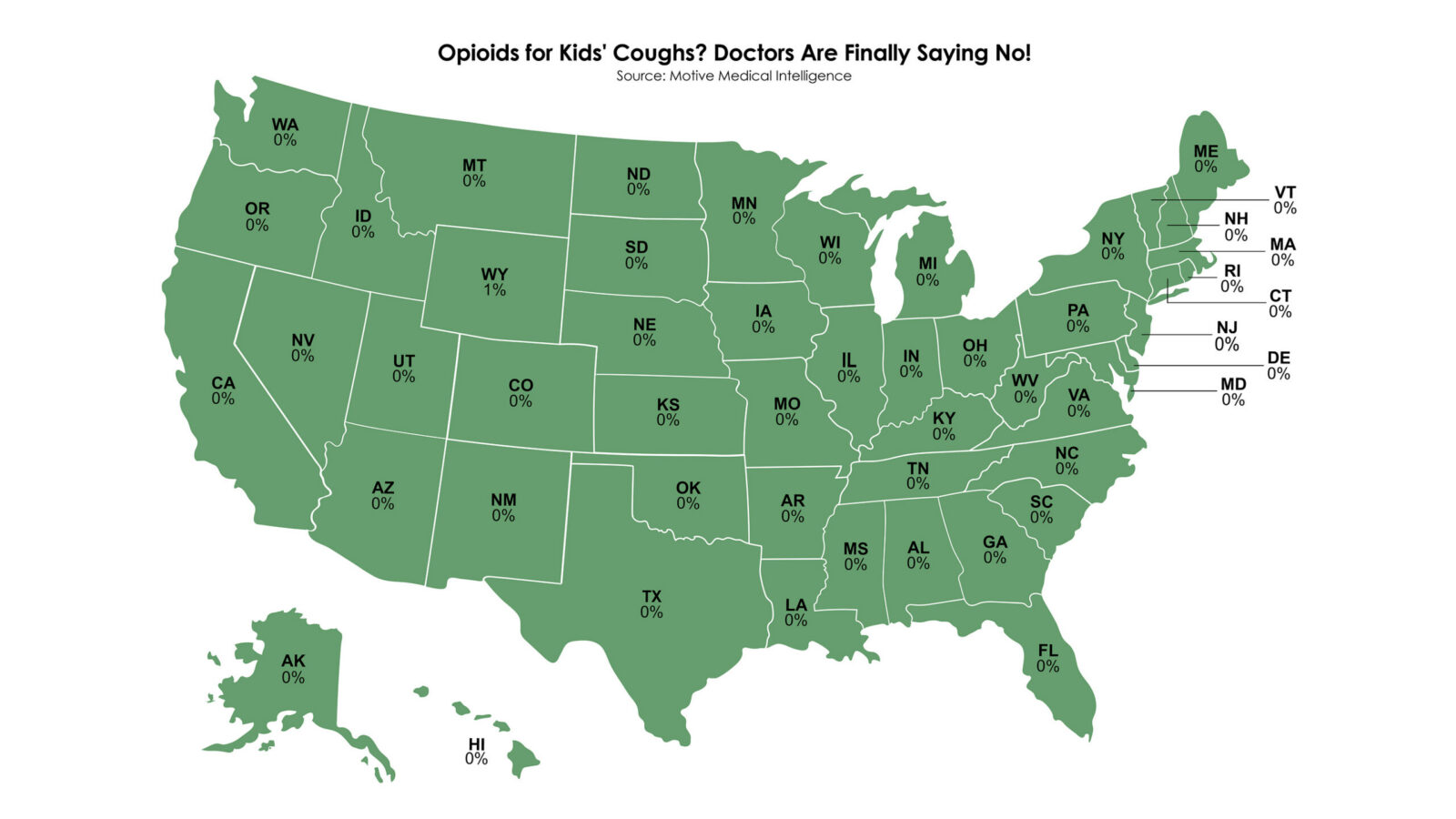
SAN FRANCISCO — Opioid cough medicines are now prescribed in just four out of every 10,000 pediatric office visits for coughs or respiratory infections in the United States, according to a new analysis by Motive Medical Intelligence.
The study analyzed more than 100 million insurance claims from October 2022 through September 2024 using Motive’s Practicing Wisely clinical analytics platform.
Researchers found that prescriptions for codeine or hydrocodone cough medicines were associated with only 0.04% of pediatric office visits for coughs or respiratory infections, marking a sharp decline from earlier decades when opioid cough syrups were commonly prescribed to children.
“This is welcome news,” said Rich Klasco, M.D., Chief Medical Officer at Motive. “For decades, opioid cough medicines were prescribed to children despite limited evidence of benefit and very real safety concerns. These data show how dramatically clinical practice can change when physicians, medical societies, and regulators align around the evidence.”
Codeine and hydrocodone have historically been used as cough suppressants, but studies have not established their effectiveness for treating coughs in children. The drugs can also cause serious adverse effects, including respiratory depression.
Safety concerns prompted growing scrutiny from health authorities beginning in the 2010s. The U.S. Food and Drug Administration issued warnings about opioid cough and cold medicines, while the American Academy of Pediatrics urged physicians to stop using codeine in children.
Previous research had already documented steep declines in prescribing. A University of Michigan study found that pediatric prescriptions for codeine cough syrup dropped 90.1% between 2014 and 2019, while hydrocodone cough syrup prescriptions fell 75.7%.
Motive’s analysis suggests the downward trend continued after 2019.
Nevada and Vermont recorded no opioid cough syrup prescriptions for children in the claims analyzed, while Rhode Island, Maine, New Jersey and Massachusetts had near-zero rates. Wyoming posted the highest rate, though Motive said it was not statistically different from the national rate.
“The important story here isn’t just that prescribing declined,” Klasco said. “It’s that a deeply entrenched clinical practice can change when the evidence becomes clear, and the healthcare community acts on it.”
The study was conducted using Motive’s Practicing Wisely analytics system, which evaluates clinician-level performance against evidence-based standards of care. The platform is designed to help health plans and healthcare systems identify potentially inappropriate care, reduce waste and assess quality.