


COSTA MESA, Calif. — New research from Amen Clinics has identified differences in brain activity patterns between women experiencing postpartum depression and people diagnosed with major depression, potentially offering insights into more individualized mental health treatment.
The research, led by Dr. Daniel Amen and colleagues, examined brain scans from 58 women with postpartum depression and compared them with scans from 26,077 individuals with major depression. The study, which is being prepared for publication, used single-photon emission computed tomography (SPECT) imaging to examine patterns of brain function.
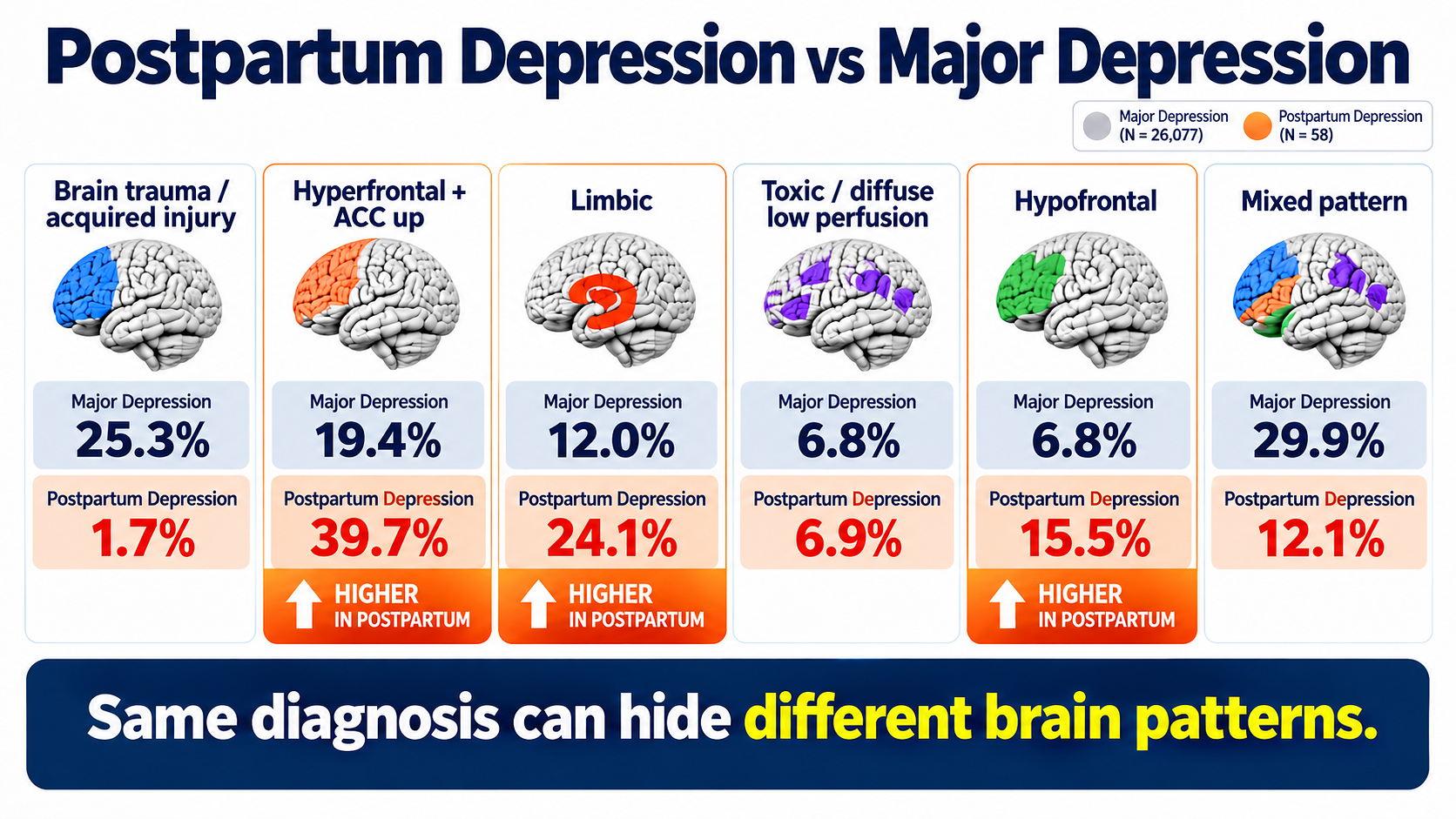
Researchers classified the scans into six categories, including hyperfrontal/anterior cingulate cortex, limbic, hypofrontal, toxic or diffuse low perfusion, brain trauma or acquired injury, and mixed patterns.
Nearly 40% of women with postpartum depression showed a hyperfrontal/anterior cingulate cortex pattern, compared with 19.4% of individuals with major depression.
Limbic patterns were also approximately twice as common among women with postpartum depression, appearing in 24.1% of cases compared with 12% in the major depression group.
Hypofrontal patterns were identified in 15.5% of postpartum depression patients, compared with 6.8% of those with major depression.
The largest difference involved patterns associated with brain trauma or acquired injury, which appeared in 25.3% of the major depression group but only 1.7% of women with postpartum depression.
According to Amen Clinics, the findings suggest that patients with similar psychiatric symptoms may exhibit different patterns of brain activity. Researchers believe understanding these differences could eventually help explain variations in treatment responses and support more personalized approaches to mental health care.
The company said brain SPECT imaging is used as part of a comprehensive clinical evaluation rather than as a standalone diagnostic tool for postpartum depression.
The research comes amid renewed public discussion about postpartum mental health following the high-profile case of Lindsay Clancy, a Massachusetts mother accused of killing her three children in 2023. Her defense has argued that she experienced postpartum psychosis, a claim disputed by prosecution experts.
Amen Clinics said its findings highlight the potential value of examining biological differences among patients with psychiatric disorders rather than relying exclusively on symptom-based diagnoses.
However, the research has not yet been published, and its clinical implications require further investigation.