

SAN DIEGO — Bruker Corp. announced new mass spectrometry systems, proteomics workflows and software updates at the American Society for Mass Spectrometry conference, including tools designed to support disease biology research, energy industry analysis and semiconductor manufacturing.
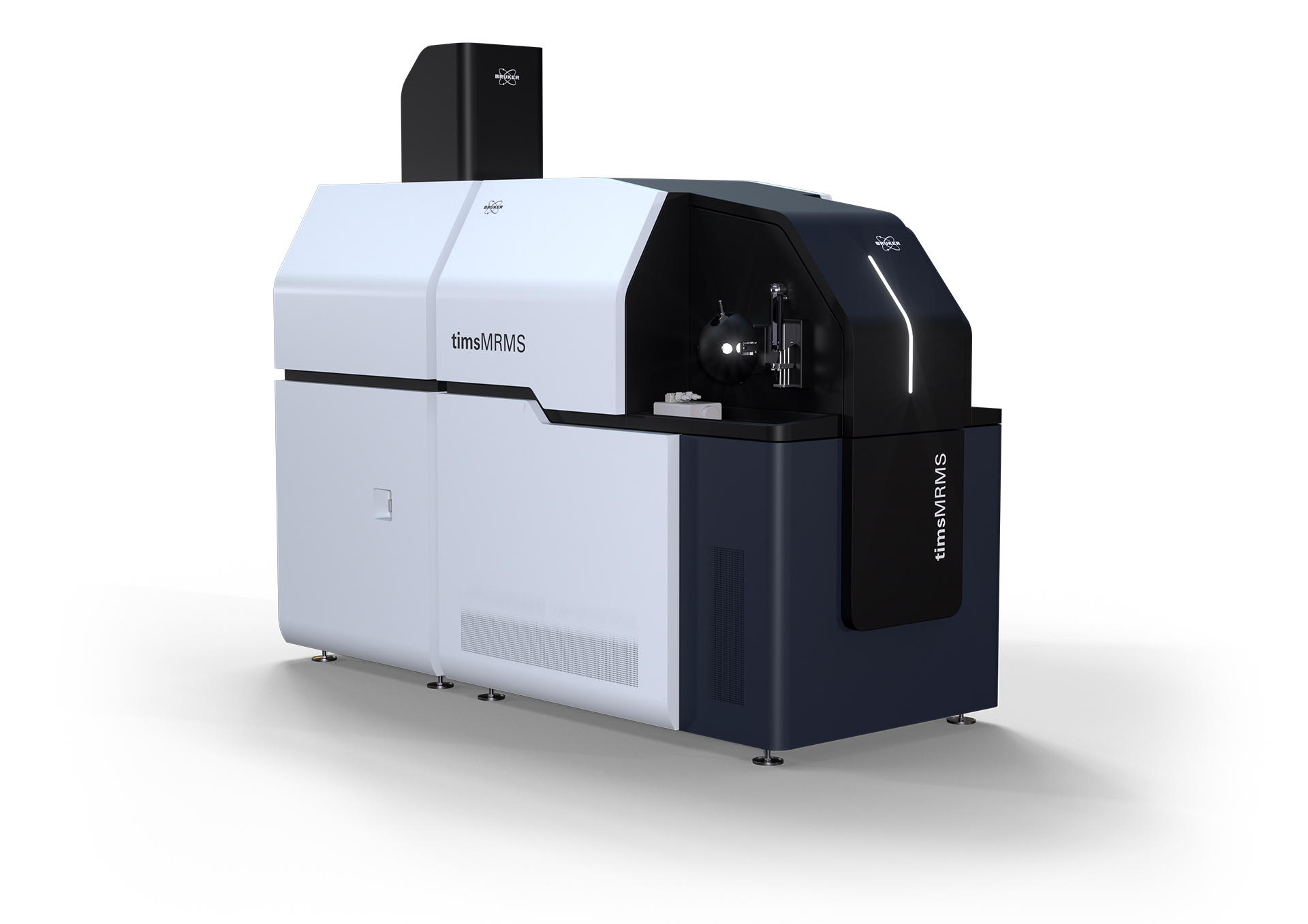
The company launched the timsMRMS system, which combines trapped ion mobility separation with ultra-high-resolution magnetic resonance mass spectrometry. Bruker said the system is designed for ultra-complex mixture analysis in areas including energy industry research, life sciences, petroleomics, dissolved organic matter, biofuel fingerprinting and battery research.
The company also reported advances in 4D proteomics, intact and top-down proteoform analysis, and hybrid qualitative and quantitative 4D metabolomics.
Frank H. Laukien, PhD, president and CEO of Bruker, said proteoforms are central to understanding disease biology.
“Proteoforms are the fundamental unit of molecular disease. A single gene encodes one protein group but can give rise to over 50 protein variants through genetic variation, alternative splicing, post-translational modifications and protein processing. From just 20,000 human genes, these biological processes generate more than one million distinct functional – and sometimes pathological – human proteoforms,” Laukien said.
He said Bruker’s timsOmni platform combines trapped ion mobility and trapped ExD technologies to support higher-dimensional proteoform analysis.
“The revolutionary timsOmni combines trapped ion mobility and trapped ExD technologies to give scientists higher dimensionality, unmatched top-down sensitivity and information-rich structural information for deeper insights. The unique OmniScape AI-driven top-down software transforms this biological complexity into clarity and insights. Deep functional proteoform analysis can now compress the path from discovery to biomarkers, precision medicine and novel therapies. We have entered the era of deep, differentiated proteoform structural variant analysis for functional proteomics 2.0 at scale, with profound benefits for a much deeper understanding of the molecular drivers of disease. This opens an unprecedented opportunity to accelerate drug discovery with meaningfully higher drug candidate success rates in humans.”
Bruker said the timsMRMS system delivers mass resolving power of 1 million to 10 million, down to parts-per-billion mass accuracy, and a four orders of magnitude single-acquisition dynamic range.
The company also announced performance improvements for its timsUltra AIP platform. Bruker said instrument updates, razor-PASEF methods and Spectronaut 21 software now enable identification and label-free quantification of more than 10,000 proteins in HeLa samples and more than 6,500 proteins at 500 samples per day.
A translational oncology research initiative led by Stephan Singer of University Hospital Tübingen and Oliver Schilling of the University of Freiburg is using timsTOF-based proteomics on FFPE tissue biopsy samples to identify tumor biology that may not be visible at the DNA or RNA level, Bruker said.
“In complex cancer cases, genomics does not always provide decision-relevant answers, particularly with FFPE tissue. With timsTOF-based proteomics we routinely quantify more than 10,000 proteins across clinical samples, adding functional pathway activity, metabolic dependencies, and tumor-specific resistance programs. This can enable proteomics-driven therapy strategies exploiting signaling vulnerabilities and metabolic reprogramming, or new target discovery, where NGS remained inconclusive,” Singer said.
Bruker also introduced a new argon option for timsOmni, which the company said enhances collision-induced dissociation sensitivity by four times for biomolecules. The company said the update supports deeper structural and functional characterization of proteoforms, antibodies, glycoproteins, oligonucleotides and small molecules.
Bruker announced a partnership with Integrated Protein Technologies to connect IPT’s SampleStream system directly with timsOmni under HyStar control. The companies said the setup enables automated, high-throughput buffer exchange for intact and top-down biotherapeutic characterization.
“We’ve always believed the future of proteomics depends on making high-performance intact and top-down workflows accessible. Combining SampleStream with timsOmni is a major step, and this technology can now reach scientists worldwide,” said Phil Compton, CEO of Integrated Protein Technologies.
Bruker also announced software updates, including OmniScape 2027, ProteoScape 2027 and GlycoScape 2027, to support top-down proteoform sequencing and post-translational modification analysis. The company said OmniScape 2027 includes LYRA, a de novo algorithm designed to turn top-down spectra into annotated protein sequences.
The company said its glycoproteomics workflows are now compatible with MSFragger. Bruker also highlighted tims-Casanovo, a collaboration with researchers at the University of Washington, Helmholtz Munich, the University of Antwerp and Bruker’s software team that uses a transformer neural network to translate mass spectrometry spectra into amino acid sequences.
In metabolomics, Bruker said MetaboScape now supports ecTOF dual ionization, enabling processing of simultaneous electron ionization and chemical ionization spectra for GC-HRAM chemical exposure coverage. The company also launched an early-access program for hybrid metabolomics on timsMetabo, combining kit-based absolute quantitation with untargeted 4D metabolomics discovery in a single experiment.
“Metabolomics research demands both quantitative data and broad exploratory coverage, but combining these has meant separate workflows, adding complexity. Bringing targeted and untargeted metabolomics together in a single experiment simplifies large-scale studies for a more complete picture of metabolic changes driving disease,” said Michael Witting of Helmholtz Munich.
Following its acquisition of TOFWERK in January 2026, Bruker said it is launching an Air Exposomics initiative combining TOFWERK real-time air monitoring technologies with 4D metabolomics and lipidomics. The company said the portfolio is intended to connect environmental exposure measurements with research into respiratory illness, neurodegeneration and cancer.
“This is a pivotal moment for air exposomics, combining real-time air monitoring with multiomics capabilities to advance our understanding of how air pollutant exposures are expressed in human biological systems,” said Peter DeCarlo of the Department of Environmental Health and Engineering at Johns Hopkins University.
Bruker also said TOFWERK has launched airborne molecular contaminant time-of-flight mass spectrometry solutions for yield optimization in semiconductor manufacturing and received a multi-million-dollar order for multiple systems from a leading global memory manufacturer.