

BILLERICA, Mass. — Bruker Corporation said it is accelerating development of its photothermal AFM-IR spectroscopy capabilities to support increasingly complex semiconductor research as device architectures continue to shrink.
The company, a leading supplier of nanoscale infrared spectroscopy technology, is expanding the application of AFM-IR beyond contamination analysis into areas critical for next-generation semiconductor development. These include extreme ultraviolet photoresist patterning, advanced materials for transistor scaling, and nanoscale surface functionalization for emerging device applications.
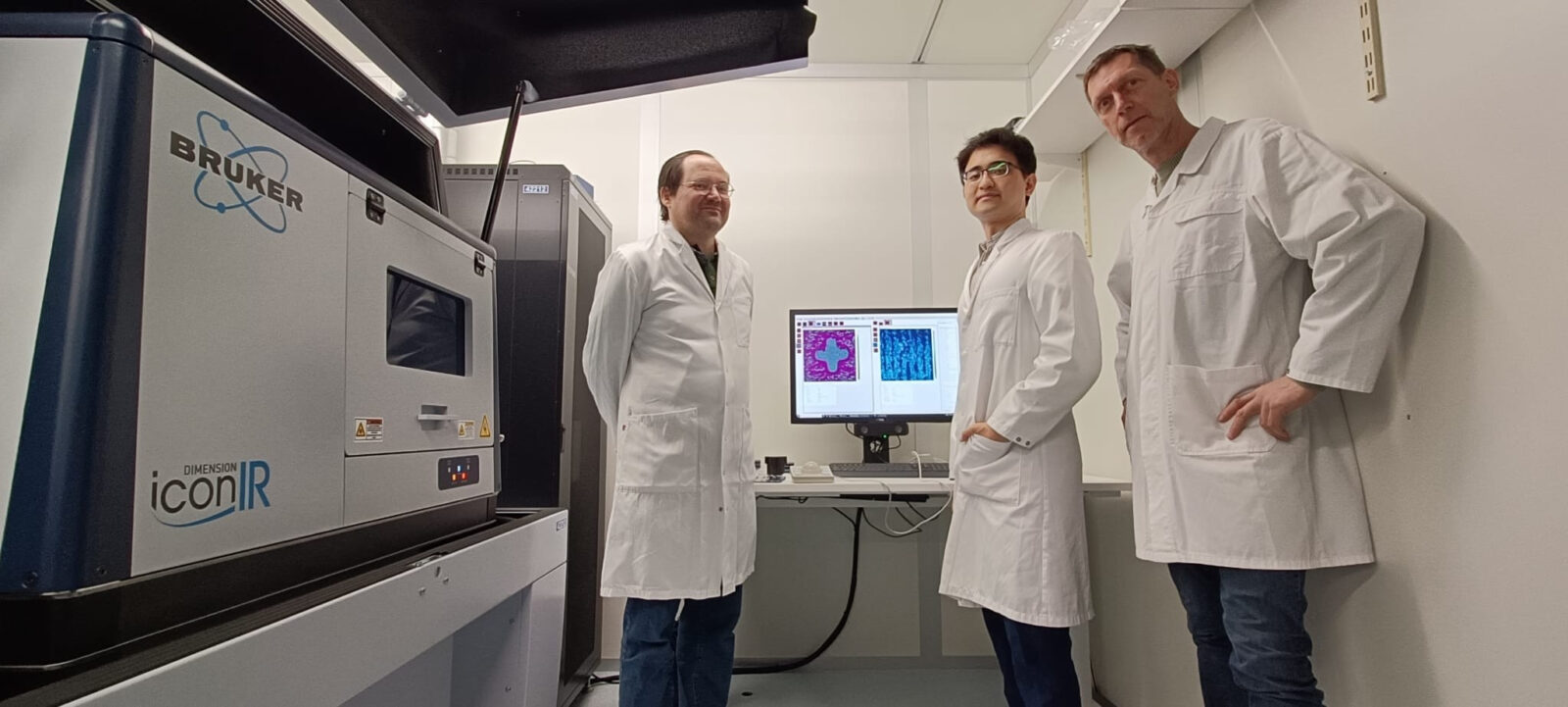
As part of the effort, Bruker has partnered with imec, a semiconductor research and innovation hub, in a joint development project. The company has installed its Dimension IconIR system at imec to evaluate how photothermal AFM-IR can address key materials characterization challenges in advanced semiconductor processes.
The collaboration is focused on using nanoscale chemical analysis to better understand material behavior and interfaces that influence device performance and manufacturing outcomes.
“Metrology requirements for advanced semiconductor research are evolving rapidly, and together with Bruker we will assess how nanoIR technology can help address emerging requirements in nanoscale materials characterization,” said Albert Minj, senior researcher at imec and project lead of the joint development project. “The IconIR system enables label-free chemical analysis with sub-5-nanometer resolution, which supports deeper understanding of EUV resist chemistry and material interactions relevant to next-generation device concepts.”
Bruker said the initiative highlights the growing role of nanoscale infrared spectroscopy in enabling insights that are difficult to obtain with conventional techniques.
“Our collaboration with imec allows us to greatly expand the capabilities of photothermal AFM-IR in semiconductor research environments,” said David V. Rossi, president of Bruker’s Nano Surfaces and Metrology Division. “By investigating complex material systems and interfaces, nanoscale infrared spectroscopy can provide chemical insights that are impossible to access with conventional techniques.”