

BOSTON–Cancer Grand Challenges has selected three international research teams to participate in AURORA, a $10 million initiative designed to evaluate how artificial intelligence can accelerate cancer research by helping scientists analyze complex data, develop hypotheses and identify promising experiments.
The program will test AI-powered research assistants, known as AI co-scientists, across several areas of cancer research, including next-generation CAR-T cell therapies, the biological mechanisms that drive cancer development and interactions between tumors and the immune system.
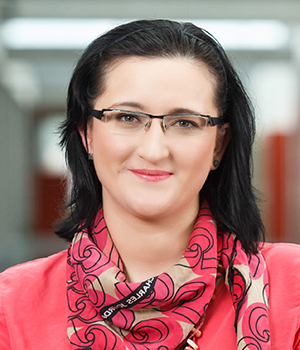
Developed in the laboratory of Marinka Zitnik, PhD, Associate Professor of Biomedical Informatics at Harvard Medical School, the AI system is designed to work alongside researchers by analyzing scientific literature, experimental findings and biological data. Scientists will retain responsibility for evaluating the system’s recommendations and making research decisions.
Cancer Grand Challenges, an international research initiative established by Cancer Research UK and the National Cancer Institute, is providing $4 million to support the three selected research teams. The funding follows a $6 million award from Cancer Research UK in March 2026 to Zitnik’s team to develop and refine the core AI technology.
“A key challenge for AI in science is understanding how it can best support researchers working on real-world problems. With AURORA, we’re putting AI co-scientists into active cancer research programmes and rigorously evaluating its impact,” Zitnik said.
“By testing the system against real scientific questions and experimental evidence, we hope to build a trusted, rigorously evaluated tool that helps researchers accelerate discovery and uncover new insights into cancer research.”
The AURORA platform uses agentic AI, a form of artificial intelligence capable of planning and executing multiple tasks toward a defined objective while adapting its approach based on new information.
The system draws on scientific publications, experimental datasets, curated knowledge bases and specialized research tools to assess evidence, examine competing hypotheses and recommend experiments. It incorporates technologies including ToolUniverse, a scientific research framework developed at Harvard University.
Researchers will establish scientific priorities, review AI-generated recommendations and determine which experiments should proceed. Results from those experiments will be used to improve the AI system’s subsequent analyses and recommendations.
The technology may also help researchers identify hypotheses that are unlikely to produce meaningful scientific advances, potentially reducing time and resources spent on less promising investigations.
Professor Charles Swanton, Chair of the Scientific Committee at Cancer Grand Challenges, said the integration of AI into cancer research could help scientists address the biological complexity of the disease.
“Cancer presents scientists with an immense landscape of biological complexity. Agentic AI could help researchers navigate that complexity by bringing together evidence, exploring a wider range of possible explanations and identifying connections that might otherwise be difficult to see,” Swanton said.
“Crucially, this is about combining the capabilities of AI with human scientific expertise. Scientists will remain at the centre of decision-making, assessing AI-generated hypotheses and determining what should be tested. Together, that could open up new avenues for understanding, preventing and treating cancer.”
The three research teams selected for the initial phase will evaluate the technology in different areas of cancer biology and treatment.
The NexTGen AURORA team, working with Nicky McGranahan at University College London, will investigate how AI can identify potential strategies for improving CAR-T cell therapies. The research will focus on identifying new therapeutic targets, evaluating combinations of tumor antigens, overcoming treatment resistance and developing more effective engineered immune cells.
The PROMINENT AURORA team, working with Nuria Lopez-Bigas at the Institute for Research in Biomedicine in Barcelona, will examine how environmental and other tumor-promoting exposures contribute to cancer development. Researchers will use AI to investigate biological changes that make otherwise healthy cells susceptible to becoming cancerous.
The MATCHMAKERS AURORA team, working with Sergio Quezada and Welles Robinson at University College London, will deploy interacting AI co-scientists to investigate how tumors interact with the immune system. The project will focus on identifying tumor antigens capable of triggering immune responses and determining which T-cell states are most effective at recognizing and attacking cancer cells.
The three teams were selected through a competitive review process involving members of the Cancer Grand Challenges Scientific Committee and external AI specialists. Proposals were evaluated based on scientific significance, suitability for AI-assisted research, the quality of proposed interactions between researchers and AI systems, and opportunities for experimental or clinical validation.
The initial projects will serve as a testing ground for determining whether AI co-scientists can improve research efficiency and contribute to scientifically meaningful discoveries. Findings and feedback from the participating teams will be incorporated into the shared AURORA platform to refine its capabilities and evaluate its performance.
If the initial phase demonstrates promising results, Cancer Grand Challenges could expand the use of AI co-scientists to additional research teams and cancer research challenges.
Since its establishment in 2016, Cancer Grand Challenges has committed $624 million to support 21 international research teams investigating 18 major challenges in cancer research.
AURORA is funded by Cancer Research UK through Cancer Grand Challenges.
