

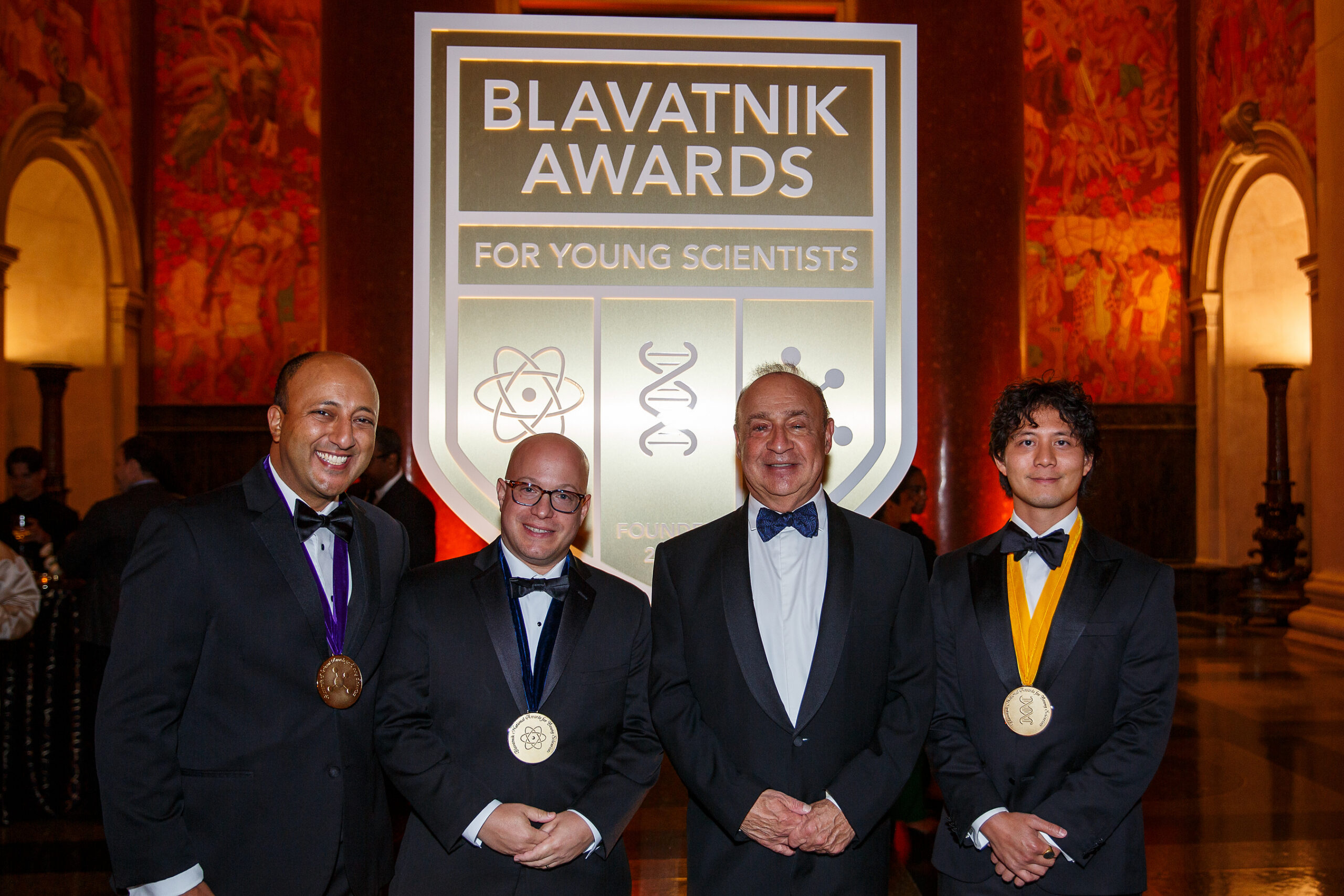
NEW YORK — Three scientists have received $250,000 each through the 2026 Blavatnik National Awards for Young Scientists, recognizing breakthroughs in organic chemistry, genome engineering and bioelectronics that could advance drug development and medical treatments.
The awards, presented by the Blavatnik Family Foundation and the New York Academy of Sciences, were announced during the program’s 20th anniversary gala at the American Museum of Natural History on Oct. 6.
The awards recognize scientists and engineers age 42 and younger working at U.S. academic and research institutions. This year’s three winners were selected from 372 nominees representing 187 institutions across 43 states.
An independent scientific jury also selected 15 finalists, each receiving $15,000 in unrestricted funding.
David Nagib, Professor of Chemistry at The Ohio State University, received the Chemical Sciences Award for developing new methods in organic synthesis that could accelerate pharmaceutical research.
Nagib’s laboratory focuses on using highly reactive chemical species, including radicals and carbenes, to modify complex molecules and create building blocks for new medicines. His research aims to make drug discovery faster, more efficient and less expensive while enabling the development of more selective treatments.
Patrick Hsu, a bioengineer at the Arc Institute and Stanford University, received the Life Sciences Award for his contributions to genome engineering and programmable biological systems.
Hsu, who co-founded the Arc Institute, has expanded CRISPR technology through the development of RNA-targeting enzymes and programmable bridge RNAs capable of directing large-scale changes to genetic material.
His research also includes artificial intelligence models designed to predict and engineer biological sequences, potentially advancing gene therapies and other applications in biotechnology.
Jonathan Rivnay, Professor at Northwestern University, received the Physical Sciences and Engineering Award for developing flexible bioelectronic materials that interact with living cells and tissues.
Rivnay’s research focuses on bridging electronics and biology to create medical technologies capable of monitoring and influencing biological processes.
Among his innovations are implantable devices described as “living pharmacies,” which contain engineered cells programmed to produce and release medications inside the body.
The technology could support more personalized treatments for chronic conditions, including cancer, diabetes and circadian rhythm disorders.
“We are extremely proud to recognize this year’s National Laureates and to welcome them into the Blavatnik Awards community,” said Len Blavatnik, Founder of Access Industries and Head of the Blavatnik Family Foundation.
The anniversary ceremony was hosted by Len and Emily Blavatnik and featured Robert P. Lifton, MD, PhD, President of The Rockefeller University.
The Blavatnik National Awards provide unrestricted financial support to early-career researchers, allowing recipients to pursue scientific discoveries across chemistry, life sciences, physics and engineering.