

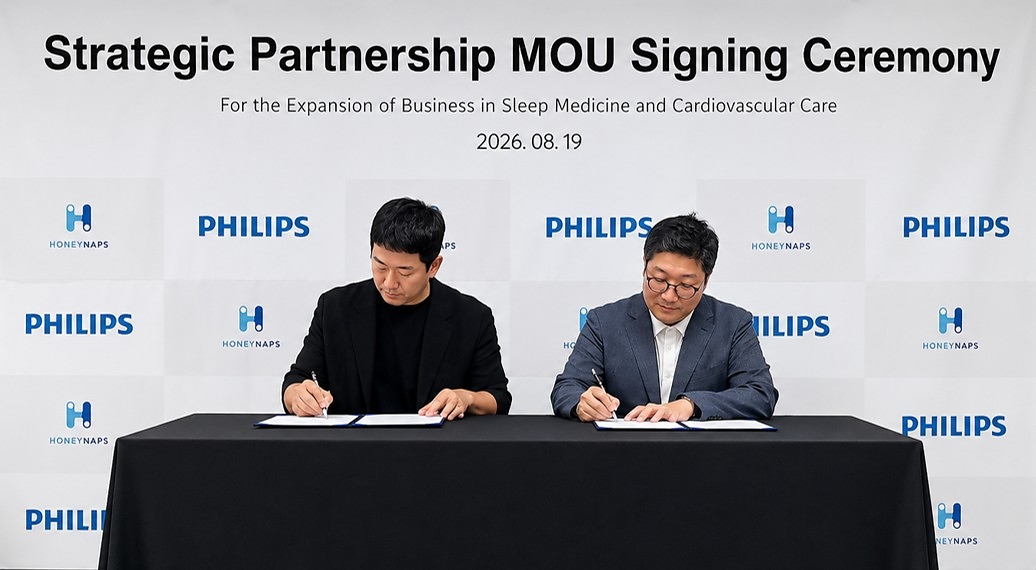
BOSTON — Philips Korea and HoneyNaps have signed a memorandum of understanding to explore new healthcare opportunities involving the relationship between sleep disorders and cardiovascular disease.
The companies signed the agreement on Aug. 19 and plan to combine their technologies, healthcare provider networks and commercial capabilities to develop initiatives spanning sleep health, cardiology and cardiovascular disease management.
The collaboration will examine ways to integrate sleep data with cardiovascular risk factors and may include academic programs and other research-related activities.
Sleep disorders, particularly obstructive sleep apnea, have been associated with cardiovascular conditions including hypertension, atrial fibrillation, heart failure, coronary artery disease and stroke. The companies said those links support a more integrated approach to assessing and managing cardiovascular risk.
Philips Korea will contribute its health technology and sleep and respiratory care capabilities, while HoneyNaps will bring its artificial intelligence-based sleep medicine platform.
HoneyNaps develops sleep disorder diagnostic and analysis technologies using AI authorized by the U.S. Food and Drug Administration. Its platform covers biosignal sensing, analysis, diagnosis and treatment, and the company has also expanded into contract research organization services for clinical trials.
Philips’ Sleep and Respiratory Care business provides technologies for managing and treating sleep and respiratory disorders, including sleep apnea, in hospital and home settings.
“This agreement is significant because it brings together the expertise and commercial capabilities of both companies to explore new healthcare opportunities based on the relationship between sleep and cardiovascular health,” said Sean Ha, also known as Tae Kyoung Ha, President of HoneyNaps USA.
“Going forward, we will actively explore ways to integrate sleep data with cardiovascular risk factors in cardiology and cardiovascular disease care. We also plan to broaden our collaboration through academic initiatives and other activities, creating new value that encompasses both sleep and cardiovascular health.”