

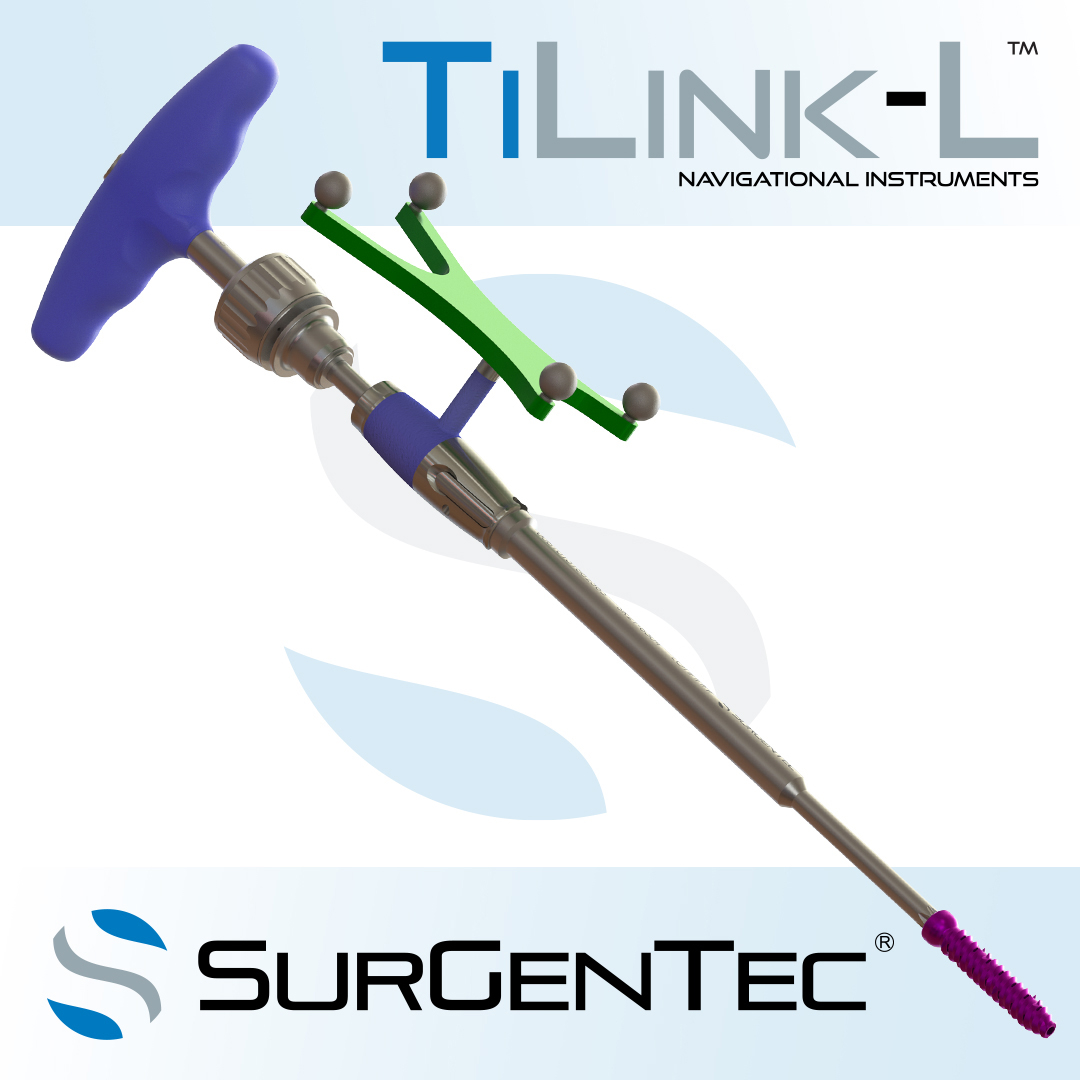
BOCA RATON, Fla. — SurGenTec, LLC announced that the U.S. Food and Drug Administration has granted 510(k) clearance for its TiLink Navigation Instruments, enabling use with the company’s TiLink SI Joint Fusion System in sacroiliac joint procedures.
The system is designed to be compatible with Medtronic’s StealthStation navigation platform, allowing surgeons to use real-time guidance during minimally invasive SI joint fusion surgeries.
The clearance expands SurGenTec’s portfolio of sacroiliac joint solutions and reflects the company’s focus on developing precision-based technologies aimed at improving outcomes for patients with SI joint pain.
The TiLink Navigation instruments are intended to help surgeons accurately locate, access, and prepare the sacroiliac joint for fusion. When paired with navigation technology, the system supports enhanced visualization and more precise implant placement during procedures.
The TiLink implant incorporates the company’s Nanotex nano-surface technology and a compression-based design intended to support bone integration and joint stabilization. Preclinical ovine studies have shown that the nanotopography of the surface promotes both bone on-growth and in-growth at the implant interface.
Navigation-assisted approaches are becoming more widely used in minimally invasive SI joint procedures, offering greater accuracy and improved visualization of complex anatomy.
Potential benefits of the navigated TiLink system include more precise implant placement and joint compression, improved visualization of pelvic structures, and the possibility of reduced operative time, radiation exposure, and procedural complications.
“The TiLink Navigation Instruments introduces a new level of efficiency and control in sacroiliac joint fusion,” said Dr. Joshua Abrams, an orthopedic spine surgeon at the Desert Institute for Spine Care in Phoenix, Arizona. “When used with Navigation, it enables highly accurate, minimally invasive implant placement, which may help reduce operative time while enhancing procedural safety and outcomes for patients with SI joint dysfunction who have not responded to conservative treatment.”