

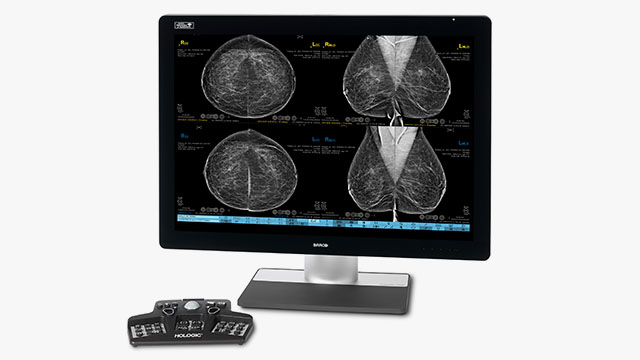
MARLBOROUGH, Mass. — New research presented at a recent breast imaging conference suggests that artificial intelligence may help radiologists detect difficult-to-identify forms of breast cancer, including invasive lobular cancer, a subtype that can be harder to see on standard mammograms.
The findings, presented at the Society of Breast Imaging Symposium in Seattle, examined Hologic’s AI-powered breast cancer detection technology and its ability to identify cancers that are often missed during routine screenings.
“Invasive lobular cancers are more challenging to detect on a mammogram because of their unique characteristics,” said Mark Horvath, President of Breast & Skeletal Health Solutions at Hologic. “In the study, AI maintained high sensitivity for flagging these cancers, including some that had been interpreted as negative at a prior screening. These data add to a growing body of evidence that AI can act as a powerful supportive tool for radiologists as they review the full spectrum of breast cancers.”
Researchers at Massachusetts General Hospital conducted a retrospective, single-center study analyzing invasive lobular cancer cases diagnosed over a 10-year period. The cases were divided into two groups: cancers detected during routine screenings and those initially missed but diagnosed within a year of a negative exam.
Using Hologic’s AI detection software to reanalyze 239 cases, the system identified and correctly localized nearly 90 percent of confirmed invasive lobular cancers. The technology also flagged 43 percent of cases that had originally been interpreted as negative during routine screening.
Invasive lobular cancer accounts for roughly 10 to 15 percent of all breast cancer cases and originates in the milk-producing glands of the breast. Due to its growth pattern, it can be more difficult to detect on imaging, sometimes leading to diagnosis at a later stage. By comparison, ductal cancers, which begin in the milk ducts, are more commonly identified through standard screening methods.
Globally, breast cancer remains a leading health concern. Research cited in the study estimates that one in 20 women will be diagnosed with breast cancer in their lifetime, with projections suggesting that annual cases could reach 3.2 million by 2050, along with 1.1 million deaths per year if current trends continue.
The study’s authors noted several limitations. Because the analysis was conducted at a single institution and reviewed cases retrospectively, the results may not reflect how the technology would perform in real-time clinical settings. The study also did not evaluate false-positive rates, recall rates, or biopsy outcomes, and it focused solely on invasive lobular cancer, limiting comparisons with other breast cancer types.
At the same conference, the company also highlighted its 3D imaging technology, which uses artificial intelligence to reduce the number of images radiologists must review while maintaining image quality and diagnostic accuracy.
The research adds to growing interest in the use of AI as a support tool in medical imaging, particularly in improving detection rates for cancers that are traditionally more difficult to identify.