

COLD SPRING HARBOR, N.Y. — Scientists at Cold Spring Harbor Laboratory have used concepts from machine learning to investigate how the immune system learns to avoid attacking the body’s own tissues.
The study focused on T cells, which undergo a training process in the thymus known as negative selection. During this process, T cells are exposed to fragments of the body’s own proteins, called self-peptides. Cells that react strongly to those peptides are eliminated.
A longstanding question in immunology is how T cells learn to tolerate the body when each cell encounters only a small fraction of the vast number of self-peptides found throughout the body.
“This has long been an open question in immunology,” said Hannah Meyer, Assistant Professor at Cold Spring Harbor Laboratory. “Negative selection is a crucial process, but if T cells had to test against every single one of the body’s peptides, it would take forever.”
Meyer and CSHL Associate Professor Saket Navlakha approached the question using the machine-learning concept of generalization, in which a system learns from a limited set of training examples and applies that knowledge to new information.
The researchers found that the immune system appears to satisfy two important conditions for generalization. First, the abundance of self-peptides in the thymus closely reflects their abundance in tissues elsewhere in the body. Second, T-cell receptors are cross-reactive, meaning a single receptor can recognize multiple similar peptides.
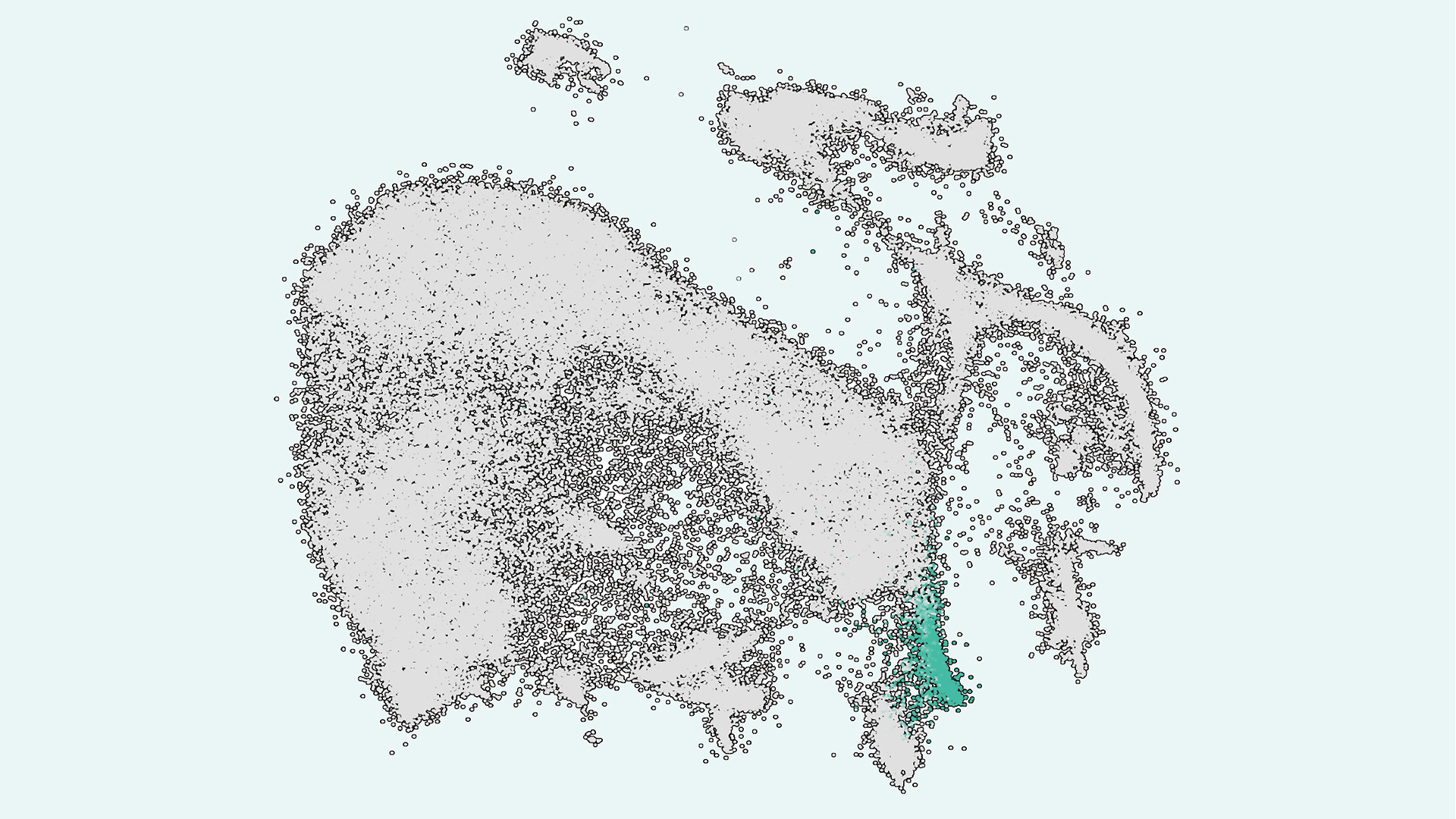
Using single-cell sequencing and computational simulations, the researchers estimated that individual T cells need to encounter only a small portion of available self-peptides during their development.
The study found that about 90% of self-reactive T cells could be correctly eliminated in the thymus even when each cell encountered only about 10% of the body’s self-peptides.
Researchers also examined whether failures in this generalization process could contribute to autoimmune disease. Their computational model reproduced features associated with autoimmune polyendocrine syndrome type 1, a rare disorder in which the immune system attacks healthy tissues.
“We’re calling this direction ImmunoAI,” Navlakha said. “We’re not trying to create AI inspired by the immune system, but we’re studying how the immune system solves fundamental machine learning problems.”
The researchers said viewing immune-system behavior through the lens of machine learning could offer new ways to study immune tolerance, autoimmunity and other diseases.