

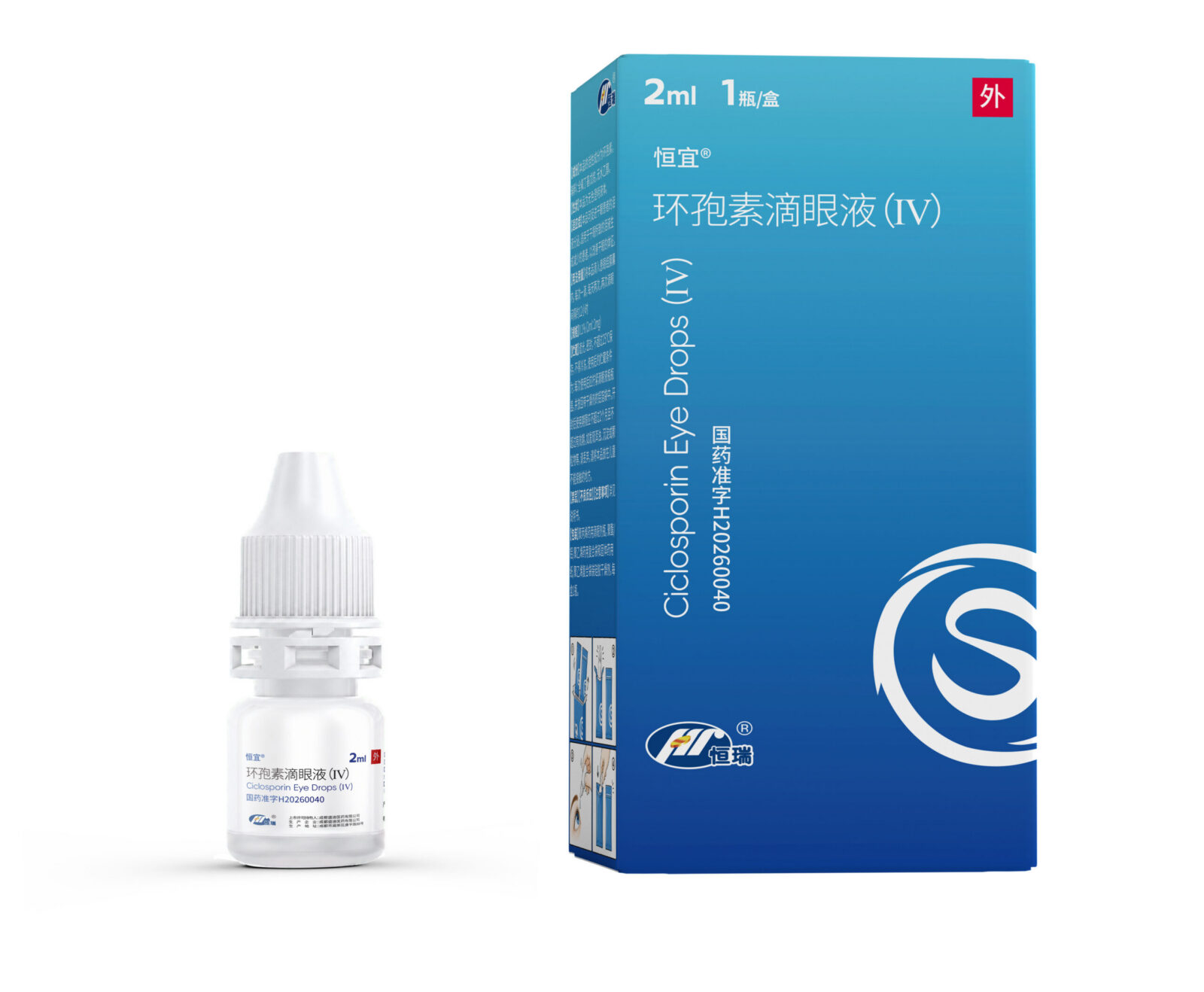
Cambridge, Mass.— Hengrui Pharma and Novaliq said China’s National Medical Products Administration has approved Heng Yi, a 0.1% cyclosporine ophthalmic solution, for the treatment of dry eye disease.
The therapy is intended to increase tear secretion in patients with reduced tear production and improve signs of the disease.
Heng Yi is the first water-free 0.1% cyclosporine ophthalmic solution approved in China and the second dry eye treatment based on Novaliq’s EyeSol platform to receive approval in the country. Hengrui’s Heng Qin, a perfluorohexyloctane ophthalmic solution, was approved in China in 2025.
Dry eye disease is a multifactorial condition associated with disruption of tear film stability and inflammation. Symptoms can include dryness, burning and a foreign-body sensation, while damage to the ocular surface can affect vision and quality of life.
Heng Yi combines cyclosporine, an anti-inflammatory drug, with perfluorobutylpentane, a semifluorinated alkane used as a water-free delivery vehicle. The companies said the formulation’s spreading properties help reduce friction on the eye’s surface.
Hengrui and Novaliq entered a strategic collaboration in 2019 that gave Hengrui exclusive rights to develop, manufacture and commercialize the cyclosporine ophthalmic solution in China.
The approval was supported by a randomized, double-blind and vehicle-controlled Phase 3 study involving 206 adults with moderate-to-severe dry eye disease in China.
Patients were randomly assigned to receive either Heng Yi or the vehicle twice daily. The study evaluated changes in total corneal fluorescein staining and eye-dryness scores after 29 days.
Results showed that Heng Yi significantly improved total corneal fluorescein staining by Day 15. At Day 29, patients receiving the therapy had an average reduction of 4.8 points, compared with a 3-point reduction in the control group. The companies said the treatment also demonstrated a favorable safety and tolerability profile.
The product, developed under the name CyclASol, was approved by the U.S. Food and Drug Administration and launched in the United States in 2023. It received centralized approval in the European Union in September 2024 for adults with moderate-to-severe dry eye disease.
Hengrui said Heng Yi and Heng Qin provide complementary treatment options targeting common underlying causes of dry eye disease, including inflammation and excessive tear evaporation.