

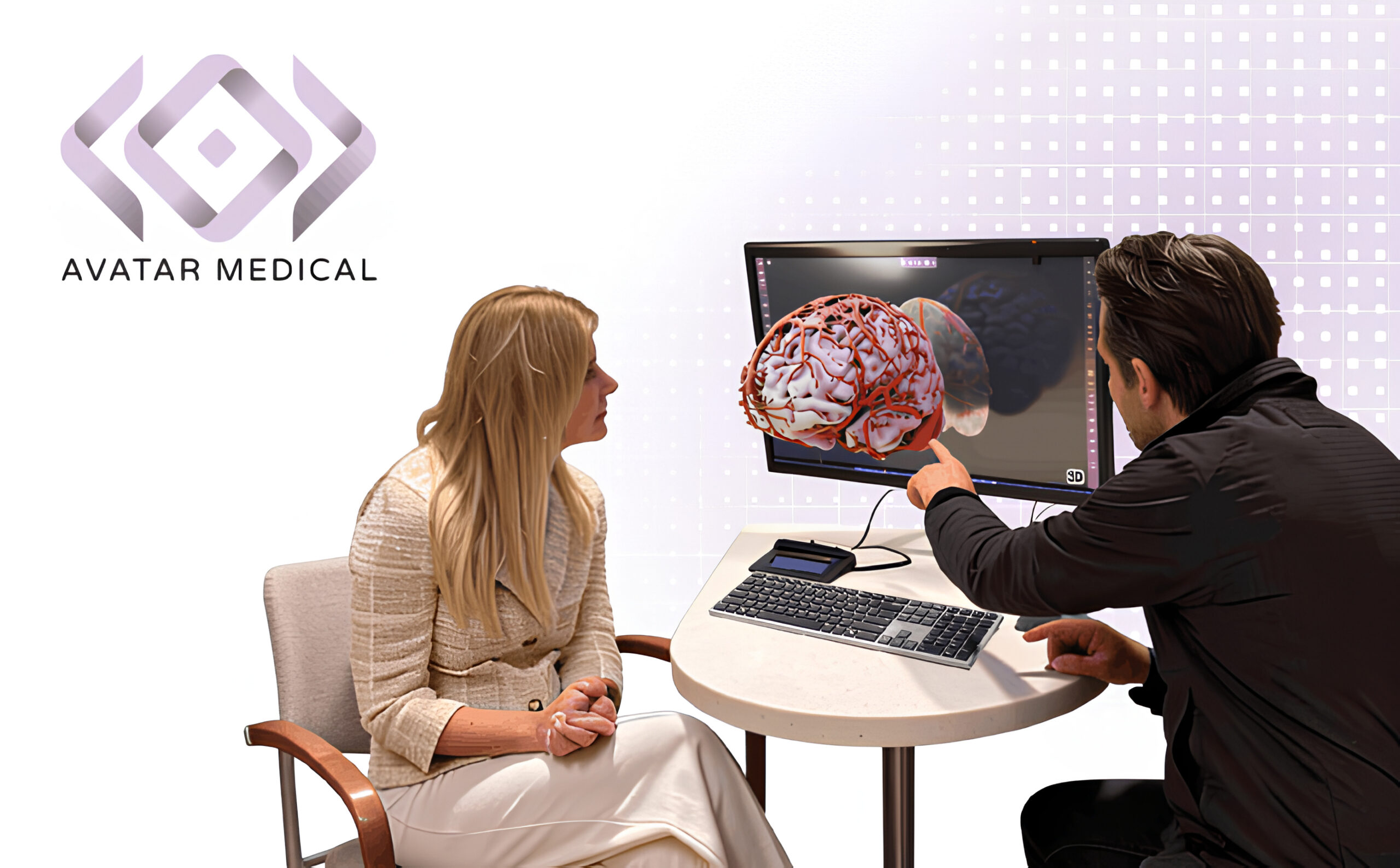
Mountain View, Calif. — Avatar Medical announced that UHealth – University of Miami Health System and the Miller School of Medicine have begun deploying the Eonis Vision platform to support patient education and clinical communication during consultations.
The system combines Avatar Medical Vision software with Barco’s Eonis 3D display to convert CT and MRI scans into interactive, patient-specific three-dimensional images. Physicians can rotate and examine the images with patients while discussing diagnoses and treatment options.
UHealth is the first institution to implement the combined software and display system in a clinical setting. Physicians in the Department of Neurological Surgery are using the technology to help patients understand conditions including brain tumors, vascular abnormalities and proposed surgical approaches.
The platform runs on Dell Pro Precision workstations equipped with NVIDIA RTX PRO Blackwell-generation graphics processing units. It allows neurosurgeons to display a patient’s anatomy in a glasses-free, floating 3D format during appointments without additional preparation or major workflow changes.
“This technology changes the clinic experience,” said Dr. Michael Ivan, Professor of Clinical Neurological Surgery at the University of Miami Miller School of Medicine and Director of Skull-base Surgery at UHealth. “Patients gain a much clearer understanding of their condition and treatment plan when they can see their own anatomy in three dimensions. That clarity reduces anxiety and improves the quality of the conversation between patient and physician.”
Traditional CT and MRI images are primarily designed for interpretation by trained clinicians. Avatar Medical said the Eonis Vision platform is intended to make complex imaging information more understandable to patients by presenting anatomy in an interactive format.
Avatar Medical developed the platform with Barco, a medical display technology company. The companies said the system could help physicians and patients review imaging data together in real time and improve communication during clinical consultations.
“Healthcare has invested heavily in digital diagnostics and advanced imaging, yet the consultation experience has remained largely unchanged,” said Xavier Wartelle, Chief Executive Officer, Avatar Medical. “By enabling physicians and patients to view anatomy together in intuitive 3D, UHealth is demonstrating how visualization technology can transform communication, strengthen trust, and ultimately improve patient care.”
The initial deployment is focused on neurological surgery, but the technology could also be used in oncology, orthopedics, cardiology and surgical planning.