

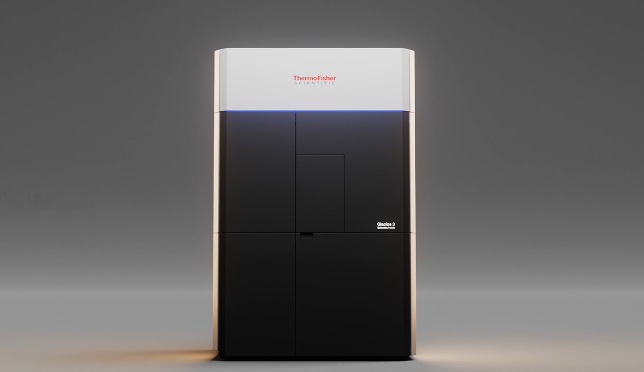
WALTHAM, Mass. — Thermo Fisher Scientific has launched a next-generation cryogenic transmission electron microscope designed to make high-resolution structural biology more accessible to a broader range of laboratories.
The new Thermo Scientific Glacios 3 Cryo-TEM introduces advancements in 200 kV imaging and structural analysis, enabling researchers to study biomolecules in greater detail. The system is aimed at supporting structure-based drug development by leveraging cryogenic electron microscopy, a technique that flash-freezes biological samples to preserve their native structure for imaging.
Cryo-EM has been instrumental in the development of treatments and vaccines, including those targeting respiratory syncytial virus, GLP-1-based therapies, and ongoing research into potential HIV vaccines.
A key feature of the Glacios 3 is Thermo Fisher’s READY System, an integrated suite designed to reduce vibrations and environmental disruptions. The system allows the microscope to be installed in a wider variety of lab environments while minimizing the need for extensive facility modifications.
The platform also incorporates AI-powered software to streamline cryo-EM workflows, improving both throughput and data quality compared with earlier systems.
Additional design enhancements are intended to improve usability, increase productivity, and support contamination-free sample transfer. The instrument supports multiple cryo-EM techniques, including single particle analysis, cryo-electron tomography, and microcrystal electron diffraction.
“The Glacios 3 Cryo-TEM opens the door for more institutions and researchers to harness the capabilities of cryo-EM, helping them tackle complex biological questions and enhance therapeutic development,” said Steve Reyntjens, vice president and general manager of life sciences at Thermo Fisher Scientific. “This combination of advanced instrumentation and AI-powered workflows represents a step change in how scientists generate insights, which will accelerate the development of life-improving treatments.”
Dr. Steve Smerdon, a professor of structural biology at the University of Birmingham, said the updated platform could reduce barriers to adoption.
“When first presented with news of the Glacios 3, I was delighted to learn of the latest developments on its platform,” Smerdon said. “The improvements to the enclosure are particularly impressive, as they will allow greater flexibility in choosing a site for the instrument with potentially substantial reductions in refurbishment and running costs.”