

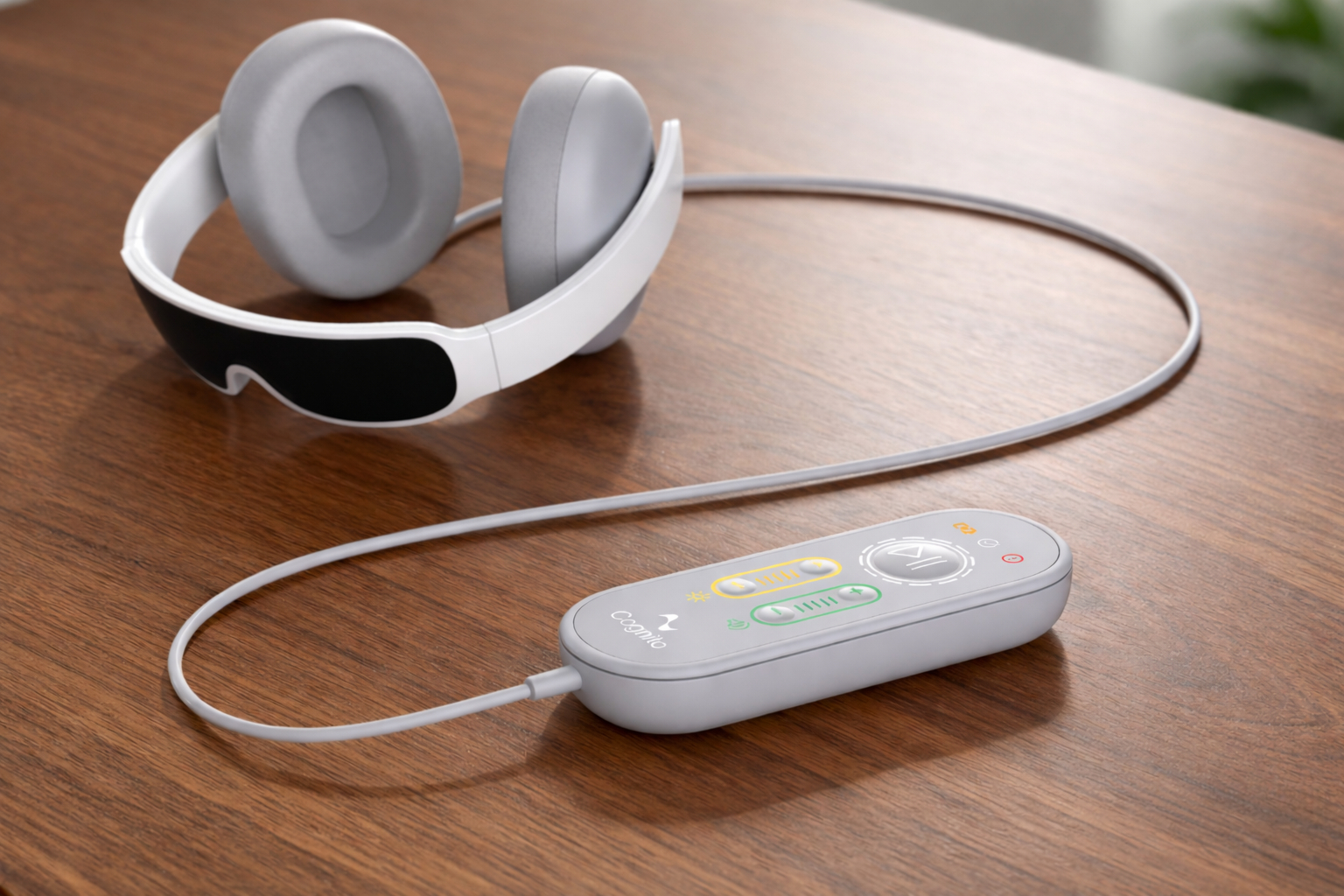
CAMBRIDGE, Mass. — Cognito Therapeutics reported new clinical findings from its investigational Spectris therapy for Alzheimer’s disease at the AD/PD 2026 International Conference on Alzheimer’s and Parkinson’s Diseases in Copenhagen, highlighting emerging links between brain activity biomarkers and patient outcomes.
The late clinical-stage neurotechnology company said the data focus on how gamma sensory stimulation delivered through its Spectris system may influence brain network activity and electroencephalography (EEG) signals associated with Alzheimer’s disease.
An oral presentation detailed results from the company’s OVERTURE feasibility study involving patients with mild-to-moderate Alzheimer’s disease. Researchers analyzed EEG, MRI, and clinical outcomes over a 24-week treatment period, examining how Spectris-induced changes in brain activity correlated with cognition, daily functioning, and structural brain preservation.
According to the findings, study participants exhibited characteristic EEG abnormalities at baseline, with comparable metrics between active and sham groups. Over time, patients receiving Spectris therapy showed reduced EEG slowing—a shift from higher to lower frequency brain activity commonly associated with disease progression—compared with those receiving sham treatment.
The company said reductions in EEG slowing were linked to slower declines in daily functioning, as measured by ADCS-ADL scores, and less brain volume loss on MRI, suggesting that EEG-based changes may serve as meaningful indicators of clinical benefit.
“These findings provide additional evidence that gamma sensory stimulation has the potential to modulate brain network activity in ways that may be clinically meaningful for patients with neurodegenerative disease,” said Christian Howell, Chief Executive Officer of Cognito Therapeutics. “By linking changes in electrophysiological biomarkers with functional and structural outcomes, this research helps deepen our understanding of how Spectris may influence the underlying biology of Alzheimer’s disease.”
Additional poster presentations explored the impact of Spectris therapy on cognitive event-related potentials, indicating improvements in neural responses tied to working memory and cognitive processing.
The findings build on prior results from the randomized, sham-controlled OVERTURE study and are informing the company’s ongoing HOPE pivotal trial. In that study, EEG biomarkers are being evaluated as potential quantitative measures to support the trial’s primary endpoint assessing cognition and daily function in Alzheimer’s patients.